

Running Apparel Buying Guide: What to Look For in 2026
⚡ Quick Answer
Listen, I've blown through more running kits than I care to admit. Cotton shirts that turned into sponges at mile 8. Shorts with pockets that bounced like they had their own GPS. Jackets that shed water like a duck but trapped heat like a sauna. The difference between dialing in your apparel and wasting money is knowing exactly what to prioritize—and honestly, most runners get this wrong.
Table of Contents
- Our Top Picks in Detail
- Fabric Technology & Materials: What Actually Works
- Fit & Cut: Why One Size Doesn't Fit Everyone
- Weather-Specific Layering for Every Condition
- Durability & Care: Making Gear Last Through Training Cycles
- Building Your Rotation: Essentials vs. Nice-to-Haves
- Frequently Asked Questions
This guide cuts through the marketing noise. I'm breaking down what actually matters when you're stacking miles, hitting trail loops, or grinding marathon repeats. You'll learn which fabrics perform under real conditions, how fit changes everything, and which features are worth the premium. By the end, you'll know how to build a rotation that lasts, breathes right, and doesn't leave you chafed at kilometer 30.
Our Top Picks in Detail
Affiliate disclosure: if you buy through these links, we may earn a commission at no extra cost to you.

BOOJO 5 Pack Workout Shirts for Men-Quick Dry Black Gym Moisture Wicking Short Sleeve T-Shirts for Running Athletic Casual
$29.99Check Price →This is the pick to look at first if you want a reliable, well-rounded option that handles everyday use without unnecessary compromises. BOOJO 5 Pack Workout Shirts for Men-Quick Dry Black Gym Moisture Wicking Short Sleeve T-Shirts for Running Athletic Casual delivers solid performance across the features that matter most in this category.
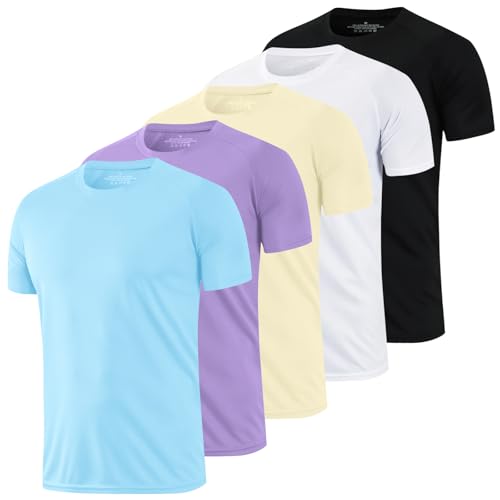
HovSiyla 5 Pack Running Shirts Men Sport Tops Dry Fit Gym Wicking Athletic T Shirts Breathable Cool Workout Shirts Black White Purple Almond Haze-Blue X-Large
$19.99Check Price →If the top pick doesn't quite fit your situation, HovSiyla 5 Pack Running Shirts Men Sport Tops Dry Fit Gym Wicking Athletic T Shirts Breathable Cool Workout Shirts Black White Purple Almond Haze-Blue X-Large is worth a close look as a capable alternative that still covers the essentials well.

adidas Mens Superlite Hat – Lightweight Athletic Running Cap for Workouts
$18.67Check Price →For buyers who want the most for their money without sacrificing the features that actually matter, adidas Mens Superlite Hat – Lightweight Athletic Running Cap for Workouts is the practical choice at this price point.
Fabric Technology & Materials: What Actually Works
Let's start with the fundamentals. Cotton is your enemy on the run. I don't care if it's vintage running culture or what your grandpa wore—cotton absorbs sweat, holds moisture, and turns heavy around mile 5. It chafes, it stinks faster, and it stays cold when wet. Full stop.
Polyester and nylon blends are the standard for a reason. They wick moisture away from skin, dry quickly, and resist bacterial growth better than natural fibers. But not all polyester is created equal. Look for fabrics specifically designed for athletic use—brands have gotten smart with yarn construction, denier weight, and weave patterns. A quality polyester blend (85% polyester / 15% spandex is typical) will feel soft despite being technical, stretch without bagging out, and maintain color through dozens of washes.
Merino wool deserves special mention because it genuinely works for cooler conditions and ultralight/trail runners. It's naturally antimicrobial, thermoregulates better than synthetics, and feels less "scratchy" than traditional wool. The downside? It's expensive, takes longer to dry than synthetic, and needs gentler washing. I use merino for cold-weather long runs and trail days, but it's not my everyday fabric for summer marathon training.
Spandex content matters more than people realize. Most running tops sit at 12-17% spandex. Below 10% and you lose recovery and range of motion. Above 20% and the fabric starts feeling plastic-y and breaks down faster. That sweet spot lets your arms drive naturally during speed work without restriction, and the fabric snaps back instead of sagging.
Fit & Cut: Why One Size Doesn't Fit Everyone
This is where most runners waste money. They buy a size medium because that's what they wear in regular clothes, then wonder why their race kit feels like a parachute or a vice during their 20-miler. Running apparel fit is its own category, and it matters enormously for comfort and performance.
Tops should be fitted but not tight. If you're doing 10-mile runs, you want minimal bounce and movement—excessive fabric flapping wastes energy and creates drag. At the same time, if you're gasping for breath, the fit is wrong. A good running top sits close to your body but has enough give that you can move your arms freely and expand your ribcage when breathing hard. The length should reach your hip bones but not extend past them; longer shirts ride up or create drag around the waist on long runs.
Shorts and tights are where fit makes the biggest difference in how many miles feel good. The waistband should sit snugly but not dig in—you should barely feel it when you're running. Built-in liners help because they eliminate the need for separate underwear and reduce chafing points. Inseam length is personal: some runners like the thigh-hugging 2-3 inch split shorts for speed work, others need 5-7 inch inseams to feel covered and reduce thigh chafing on marathons. The key is that whatever you wear for a 20-miler, you test in training first. I've seen too many runners grab new kit for race day and regret it by mile 18.
Women-specific cuts aren't just marketing. The torso length, shoulder width, and chest room are genuinely different. Men's mediums don't work for most women runners, and that's physics, not opinion. Take the time to find brands that fit your frame.
Weather-Specific Layering for Every Condition
The best runners understand layering strategy. It's not about having expensive gear; it's about understanding how to build a system that regulates temperature across seasons. I've watched runners overheat because they wore too many layers, and others seize up because they underdressed. Both are fixable with knowledge.
Summer running is simple: moisture-wicking tee or singlet, shorts, minimal coverage. The objective is getting sweat off skin and letting air move across your body. A lightweight singlet (2-3 oz) over a compression short works for most people. Colors matter in summer—darker colors absorb more heat, lighter colors reflect it. For track workouts or shorter runs, this is fine. For long runs in heat, consider a lightweight mesh or ventilated top that has deliberate breathability panels. Some runners add a lightweight hat or visor to keep sun off the face; this isn't frivolous—it reduces core temperature and glare management on long road miles.
Fall and spring are where layering gets strategic. You're not quite cold enough for a full winter kit, but a single layer gets uncomfortable as you warm up during the first 15-20 minutes. The solution: a base layer under a lightweight long-sleeve shirt or half-zip that you can pull off or tie around your waist. Base layers should be snug (no loose fabric) and genuinely moisture-wicking. Lightweight long sleeves give you flexibility; you can roll the sleeves for cooling or keep them down for sun protection and warmth. By mile 5, you'll have found your temperature sweet spot.
Winter running demands a three-layer system: base layer (tight, moisture-wicking), insulating mid-layer (lightweight fleece or synthetic—not cotton), and windproof outer shell. The base layer pulls sweat away. The mid-layer traps warm air. The shell blocks wind and sheds light precipitation. For extreme cold marathons (sub-20°F), I'll add thermal tights and possibly a second insulating layer, but most winter training days work fine with this core three. Wind direction matters more than temperature—a 35°F run with a headwind feels colder than a 25°F windless loop.
Trail running gets its own consideration. You need visibility (bright colors or reflective elements), protection from brush and debris, and durability. Nylon shorts hold up better than lightweight running shorts on technical terrain. Some trail runners add arm sleeves for sun and scrape protection. Jacket durability matters on trail because branches don't care how expensive your kit is.
Durability & Care: Making Gear Last Through Training Cycles
Quality running apparel will survive 300-400 miles of wear if you treat it right. I've had kits last through a full marathon training cycle (18-20 weeks) and multiple seasons. I've also seen expensive gear fail after 15 washes because people didn't understand care basics. This isn't complicated, but it matters.
Wash in cold water, use gentle or sports-specific detergent, and skip fabric softener (it coats fibers and reduces moisture-wicking performance). Hot water breaks down elastic and synthetic fibers faster. Detergent isn't about smell—it's about removing salt, sweat oils, and bacteria. Excessive detergent doesn't mean cleaner; it means residue buildup. Air dry everything. Dryers are slow death for running gear. High heat destroys spandex permanently, and you'll watch your favorite top lose its stretch in three cycles. Hang dry, and your kit lasts two to three times longer.
Check seams regularly. Flat-lock seams (designed for low friction) are standard now, but they can still separate with age and washing stress. If you catch a separated seam early, you can hand-stitch it or take it to a tailor. Wait too long, and the shirt is done. Same with elastic waistbands—if they start rolling or losing grip after 100+ miles, that's normal aging. It's not a defect; it's just time for a new pair.
Pilling and pilling-adjacent degradation happen with synthetic fabrics. It's cosmetic mostly, but it indicates that fibers are breaking down. High-quality polyester resists pilling better than cheap alternatives. If you're seeing heavy pilling after 50 miles, the fabric is already failing. If you see light pilling after 200+ miles, that's normal wear. Use a fabric shaver or lint brush gently to clean it up, but don't obsess—it doesn't affect performance.
Storage matters. Keep your running kit in a cool, dry place away from direct sunlight when it's not in rotation. UV exposure fades color and weakens synthetic fibers. Moisture storage (wet kit in a gym bag) accelerates degradation and creates odor that no amount of washing removes. Hang everything to dry immediately after running.
Building Your Rotation: Essentials vs. Nice-to-Haves
You don't need a massive closet to be a serious runner. I built my entire training rotation around five core pieces that work across seasons. Here's what you actually need versus what's marketing:
Essentials: A lightweight moisture-wicking tee or singlet (3-4 oz polyester blend). This is your workhorse summer top and your first layer in cooler months. Get two so you have backup when one's in the wash. A pair of running shorts with a liner that fit your legs
The best fabric technology for running apparel in 2026 includes moisture-wicking materials like CoolMax and Dri-Fit, which help keep you dry during intense runs. These fabrics are commonly found in high-performance running shirts and shorts. To choose the right fit for your running apparel, look for compression-fit options that provide support without restricting movement. Avoid loose-fitting clothes that can cause chafing or bounce during long runs. A hydration vest is worth it for marathon training as it allows you to carry water and essentials without slowing you down. It's especially useful for long runs where frequent stops for water are inconvenient. To layer your running gear for different weather conditions, start with a moisture-wicking base layer, add a mid-layer for insulation, and finish with a weather-resistant outer layer. This approach works well for both cold and hot climates. For trail running, look for a GPS watch with elevation tracking, water resistance, and a durable design. Features like heart rate monitoring and route mapping can also enhance your trail running experience. To determine the right size for running shorts, consider your waist size and the desired fit. Look for shorts that sit at the hips or mid-thigh and have a snug but comfortable fit to prevent chafing during long runs. To extend the life of your running apparel, wash it in cold water with mild detergent and avoid using fabric softeners. Hang dry instead of tumble drying to maintain fabric integrity and prevent shrinkage.Frequently Asked Questions
What is the best fabric technology for running apparel in 2026?
How do I choose the right fit for my running apparel?
Is a hydration vest worth it for marathon training?
How can I layer my running gear for different weather conditions?
What should I look for in a GPS watch for trail running?
How do I determine the right size for running shorts?
What is the best way to care for running apparel to extend its life?


